


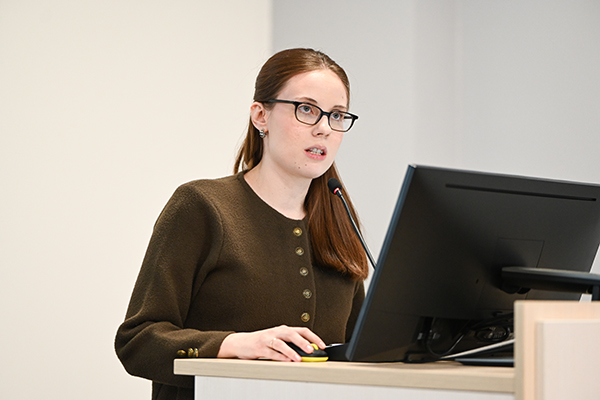
Alena Rabtsevich, a primary care physician at Diagnostic and Clinical Center No. 1; Elena Sheregova, Associate Professor at the Department of Outpatient Therapy of the Institute of Clinical Medicine, general practitioner, and Head of the Therapeutic Department at Diagnostic and Clinical Center No. 1; and Dmitry Karpenko, Associate Professor at the Department of Outpatient Therapy of the Institute of Clinical Medicine, provided a detailed overview of the causes, progression, and outcome of the disease in a 57-year-old patient. The speakers emphasized that HCC is one of the most aggressive forms of cancer and is often diagnosed at advanced stages.
Vera Larina, Head of the Department of Outpatient Therapy at the Institute of Clinical Medicine, highlighted the critical importance of patient adherence to medical recommendations and oncological vigilance among primary care physicians in the early detection of malignant tumors. She noted that regular medical examinations and timely laboratory testing can significantly improve the chances of successful treatment.
Ekaterina Shcherbina, Assistant Professor at the Department of Outpatient Therapy, discussed key aspects of patient referral pathways for cancer screening and early detection in outpatient care.
Sergey Kozyrev, Assistant Professor at the Department of Outpatient Therapy of the Institute of Clinical Medicine, and Igor Nikitin, Head of the Department of Hospital Therapy named after Academician G.I. Storozhakov at the Institute of Clinical Medicine, emphasized that effectively combating HCC requires more than medical protocols. Patients must also take greater responsibility for their own health. The speakers highlighted the importance of implementing comprehensive government prevention programs aimed at reducing the risk of HCC associated with viral hepatitis and alcohol-related liver disease.
During the discussion, participants explored modern approaches to diagnosing and treating HCC, including targeted therapy and immunotherapy. They emphasized the importance of proactive medical follow-up, a multidisciplinary approach to patient management, and close collaboration among primary care physicians, gastroenterologists, oncologists, and other healthcare specialists.
The clinical case discussion provided an opportunity to expand professional knowledge and exchange practical experience in cancer screening, diagnosis, and treatment.
Photos from the event are available in the photo album.