


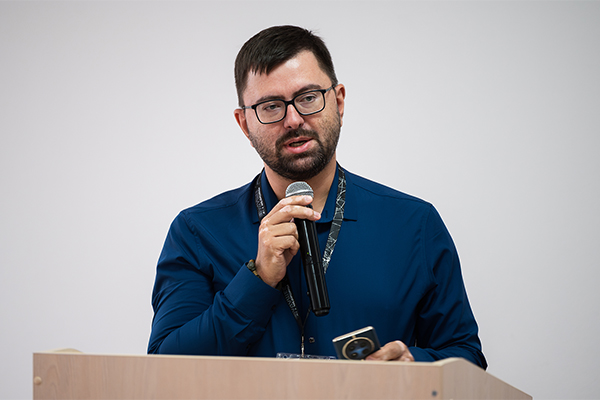
The speakers were Andrey Bursov, a graduate of Pirogov University, Adviser on Digital Medicine at the Institute of System Programming of the Russian Academy of Sciences, Chief specialist in AI at the M. Krasnov Research Institute of Eye Diseases, co-founder of the Association for Innovation in Medicine, and Sergey Vasiliev, Head of the Digital Services Support Department at Pirogov University.
The experts analyzed the path of AI development: from setting a medical task and preparing data to verifying a model, launching a pilot, and implementing it into clinical practice. Using examples from ophthalmology and ECG analysis, Andrey Bursov explained why the quality and variety of data is more important than their volume, and the coordinated work of doctors is necessary for reliable labeling.
"Markup is the packaging of your medical experience in a machine—readable format," said Andrey Bursov.
Sergey Vasiliev spoke about the organization of research on a single machine learning platform. Saving versions of models, datasets, and experimental results allows you to reproduce research and control changes. At the same time, the starting point of the project should be the specific need of the doctor, and the result should be a tool that is convenient for daily work.
"The main task of AI is to give the doctor more time, so that he spends more time not looking at the monitor, but communicating with the patient," Sergey Vasiliev emphasized.
A separate part of the meeting was devoted to piloting developments in medical organizations, technical and clinical trials, preparation of documentation and registration of a medical device. The speakers also discussed data protection and the need to think in advance about who will use the product and how it will fit into the clinic's work.
Using the example of the OCHI project aimed at controlling myopia in children, Andrey Bursov showed how communication with doctors, parents and children helps to clarify the task and rethink the initial decision. The expert urged the participants not to be afraid of criticism, to test their ideas with future users and to continue working on projects after the championship.
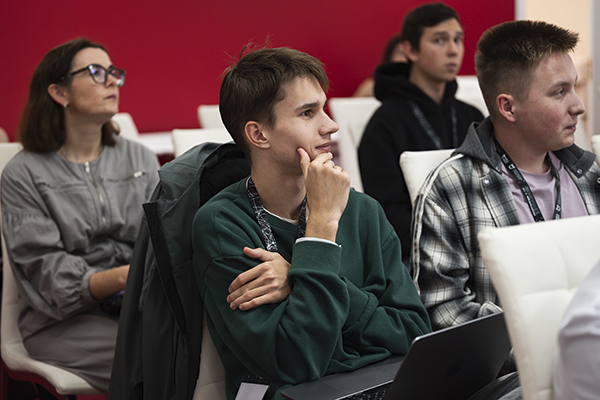
The seminar was held in the format of an open dialogue: the participants asked questions, discussed the experience of training models and the practical difficulties of creating medical AI services.
Photos from the event can be found in the album.