


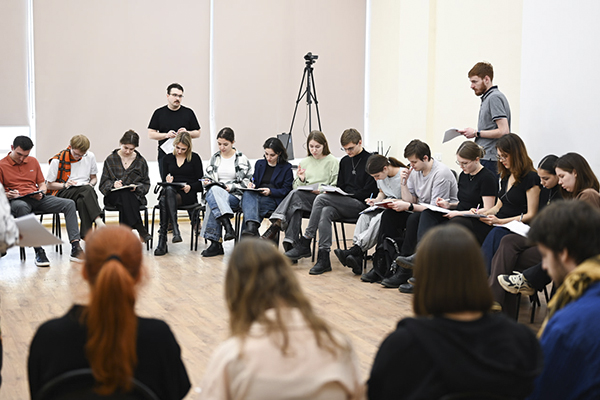
The lesson was conducted by Natalia Yunina-Pakulova, an assistant at the ICPSR Department of Clinical Psychology, and demonstrated the possibilities of the teragnostic stage of the training program used when working with groups where trust, leadership, and coordination of participants' actions are especially important. The situation of the formation of assault unit teams was used as a training model — a scenario that allows us to work out the psychological mechanisms of interaction in stressful conditions as clearly as possible.
The work took place in the format of a role-playing game and practical tasks. The students successively completed three key stages:
- a brief self-diagnosis of their current condition;
- participation in the training element of the program;
- analysis of changes and discussion of the results.
During the simulated situations, participants got to know each other in new roles, chose leaders, assigned responsibilities, and made decisions together. This format allowed us not only to study the training methodology, but also to see in practice how effective small teams are formed and what psychological factors influence their cohesion.
The event was an excellent example of how the theoretical training of students is complemented by applied training technologies that can be used in working with teams and professional teams.
You can find photos from the event in the album.