


The seminar was opened by a Professor at the Department of Faculty Surgery No. 1, Institute of Surgery, Sergey Gavrilov, who focused on the role of clinical scales in his field. He emphasized that in modern surgery, scales such as Caprini (for assessing the risk of venous thromboembolism) or Alvarado (for diagnosing acute appendicitis) are an essential "compass." According to Sergey Gavrilov, these tools enable a surgeon to objectify a patient's condition and minimize the risk of diagnostic errors, especially in emergency situations.
The discussion continued with an Associate Professor at the Department of Neurology, Neurosurgery, and Medical Genetics, Institute of Neurosciences and Neurotechnologies, Ivan Shchukin, who presented a detailed overview of scales necessary in a neurologist's practice. He highlighted the particular importance of tools such as the Glasgow Coma Scale and the NIHSS scale, which allow for a quick and accurate assessment of the severity of central nervous system damage in strokes and injuries. Ivan Shchukin noted that proficiency in these scales is mandatory not only for specialists but also for primary care physicians, as the subsequent routing of the patient depends on the correctness of the initial assessment. The associate professor proposed integrating these algorithms into the curriculum so that students can apply them flawlessly in emergency department settings.
The Head of the Department of Psychiatry and Medical Psychology at the Institute of Neurosciences and Neurotechnologies, Andrey Shmilovich, addressed issues of psychiatric diagnostics in general medical practice. He substantiated the need for screening tools, such as the Hamilton scale, to identify depressive and anxiety disorders in therapeutic patients. Andrey Shmilovich emphasized that a doctor of any specialty should be able to recognize borderline conditions that often masquerade as physical ailments. His proposal was to integrate simple and quick questionnaires into standard examinations, which would significantly improve patients' quality of life and the effectiveness of their primary treatment.
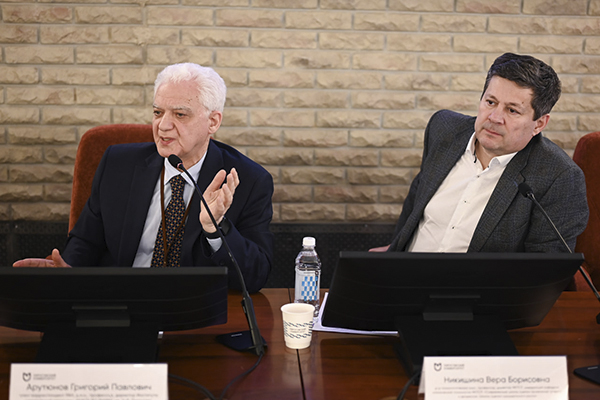
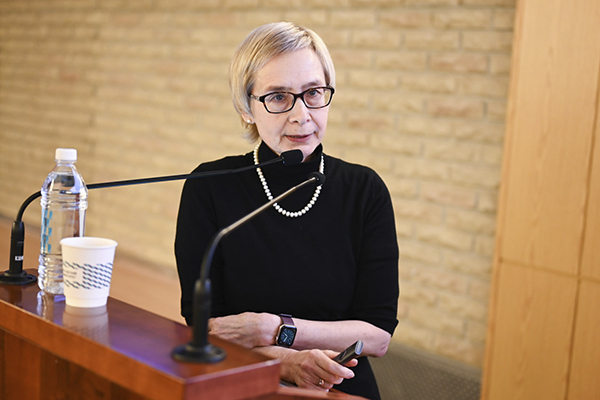
Issues of psychological safety and risk assessment were detailed by Vera Nikishina, Doctor of Psychological Sciences, Director of the Institute of Clinical Psychology and Social Work (ICPSW) and Head of the Department of Clinical Psychology at ICPSW. In her report, she presented modern scales for assessing suicide risk and manifestations of aggressiveness, which are becoming particularly relevant in the current reality. Vera Nikishina noted that psychological diagnostics should not be limited to specialized clinics alone. In her opinion, a future doctor must possess the skills for rapid assessment of a patient's emotional status to prevent critical incidents. She proposed including training in these methods in the educational tracks of clinical psychologists and general physicians as a fundamental element of safety assurance.
An important aspect of hospital care was highlighted by Elena Reznik, Doctor of Medical Sciences, Head of the Department of Propaedeutics of Internal Diseases No. 2 at the Institute of Clinical Medicine. She presented a report on scales and calculators for assessing emergency conditions and focused on tools that allow a hospital physician to quickly triage patients by severity and determine the prognosis of the disease. Elena Reznik analyzed in detail the prognostic scales used in acute heart failure and severe therapeutic pathologies. She emphasized that automating calculations through mobile applications and medical information systems significantly reduces the burden on staff and increases the accuracy of care delivery in intensive care units.
The expert portion was concluded by Vera Larina, Doctor of Medical Sciences, Head of the Department of Outpatient Therapy at the Institute of Clinical Medicine. She shifted the focus to the specifics of the outpatient polyclinic sector. Vera Larina stressed that under the severe time constraints of an appointment, a therapist needs the most concise and informative assessment tools, and she highlighted a list of priority scales for primary care, including the comorbidity index and cardiovascular risk calculators. According to the professor, the University's key task is to teach students not just to calculate scores, but to interpret this data to form a long-term plan for patient prevention and treatment in a city polyclinic setting.
The outcome of the meeting was the decision to create a unified list of scales that will be included in a methodological manual and state exam programs. The seminar moderators noted that by June 2026, all preparatory work should be completed so that the University's graduates receive a ready-made "professional package" of digital and methodological tools. This systematic approach will allow Pirogov University to strengthen its position as a leader in practice-oriented medical education, preparing specialists capable of working according to the highest international standards of evidence-based medicine.
Photos from the event can be found in the album.